
Introduction
What You’ll Learn About Losing Weight Without Exercise

In this article, I will reveal weight-loss tips without exercise. You will understand whether you can lose weight without a workout routine.
Table of Contents
The most commonly known way to lose weight involves following a workout routine. But in a bit, you will realize that it is possible to lose weight without exercise.
The science of burning more calories than you consume will be at play, and the practical eating habits that support healthy weight loss will be revealed.
Plus, understanding which foods can help keep you full while reducing your cravings.
Furthermore, we will explore simple lifestyle changes that can naturally increase calorie burn, and how sleep, hydration, and stress management can positively impact your body weight.
Lastly, I will be talking about common mistakes that can impede or slow weight loss progress and reveal realistic expectations for achieving sustainable long-term results.
Who This Guide is For?
This guide is for busy professionals who find it difficult to create time for exercise, and beginners who are looking for simple weight loss strategies that are sustainable.
Those who have injuries or medical conditions that might limit their ability to exercise, and older adults who may prefer low-impact lifestyle changes.
This guide might also be ideal for anyone else who simply wants to improve their eating habits and overall health.
If you dislike the traditional workout routine, gym environment, or you don’t like the extreme diet, this is your gig.
Why Sustainable Weight Loss is Possible Without Exercise?
Losing weight primarily depends on maintaining consistent calorie deficits; therefore, it is possible to lose weight and sustain it.
The application of healthy eating habits can significantly lose weight more than exercise alone. When small lifestyle changes are made, such as drinking more water and eating high-protein and high-fiber foods, this can lead to reduced cravings for food, which will ultimately result in sustained natural weight loss.
Now, if you get better-quality sleep, which reduces stress levels, then the hormone that influences appetite is regulated.
So, yes, the combination of healthy eating habits and normal movement activities can help you lose weight.
Can You Lose Weight Without Exercise?

The Science Behind Weight Loss
You lose weight when the body burns more calories than it consumes. This is referred to as a calorie deficit. In other words, when the body uses up the calories at its disposal, it taps into the reserve fat to fuel the body’s function; as a result, weight loss occurs.
So, when you don’t supply or feed the body with enough calories it requires through your eating, it will be forced to feed on the reserve fat, which happens to be the weight you wish to lose.
Differently put, burning fat is the real deal that translates to weight loss because it is the permanent breakdown of adipose tissue.
Metabolism plays a significant role in weight loss. It is the process the body uses to convert food and drink to energy. Thus, it determines the body’s Total Daily Energy Expenditure (TDEE). The higher metabolism you have, the more fat is burned, and vice versa.
The metabolism level of everyone is not the same because there are factors that could affect it. For instance, older people tend to have a slow metabolism, which is the reason they tend to put on weight more than those younger than them.
Let’s put it this way: energy requirements through different stages of age are different. As people age, typically they start to lose lean muscle mass; hence, their resting metabolism slows down.
There is also what is called Basal Metabolic Rate (BMR), which is the minimum number of calories the body requires to basically function, and it is also the major way the body expends energy.
The BMR covers the maintenance of cells and basic body functions such as body temperature, breathing, and blood circulation.
Now, everyone has a different BMR depending on four physiological factors that include age, muscle mass, gender, and genetics.
Healthy gradual weight loss is better and more sustainable than rapid or drastic weight loss. It has been recommended by health authorities to lose 0.5 kg (1 lb.) or 1 kg (2 lbs.) at most per week.
Losing weight gradually does not focus on a quick and temporary fix; on the contrary, it focuses on sustainability and long-term healthy weight loss habits.
Unlike the rapid weight loss approach, the gradual weight loss technique allows the body to keep lean muscle while it burns fat. Hence, resting metabolism does not diminish, but remains steady. In other words, it preserves muscle mass.
Secondly, drastic or rapid weight loss might disrupt leptin and ghrelin hormones, which could cause increased cravings for the individual. But that is not the case with gradual weight loss; in other words, it prevents such hormone disruption instead.
The gradual weight loss process enables individuals to consciously and intentionally build lasting healthy lifestyle habits, which include healthy nutrition (diet) and physical activities.
Also, rapid weight loss might cause nutrient deficiency complications and other weight-loss health-related issues, while gradual weight loss helps reduce that risk.
So, in summary, the gradual weight loss process can:
- Preserve muscle mass
- Avoid hormonal disruption
- Reduce health risk, and
- Mold people’s long-term healthy lifestyle habits
As aforementioned, a calorie deficit is the best way of losing weight. Simply, eat less food than your body requires, and you will create this deficit and condition that will burn the reserve fat in your body.
Exercise is not really needed to lose weight because food is the primary driver for weight gain. However, some form of exercise helps to complement calorie deficit approaches, research shows. It doesn’t necessarily mean high-intensity exercises; day-to-day physical activities can be beneficial.
That said, did you know that exercise may be counter-productive? Exercise often makes the body compensate by naturally conserving energy elsewhere by burning less calories or increasing appetite.
Calories In vs. Calories Out
The body gets its total energy from the food and beverages that we consume, and this total energy is referred to as calories. The body uses these consumed calories for maintenance of cells and other basic functions of the body such as temperature, breathing, and blood circulation, as mentioned above. Then, it stores excess calories as fat, which may result in weight gain.
The body breaks down the food we consume into three major classes: protein and carbohydrate.
When you consume the exact number of calories the body needs and expends, then your weight remains the same, but if you consume more or fewer calories than your body uses, then you may gain or lose weight because the body will store excess calories as fat in the body or tap into stored fat to make up the shortfall in calorie intake.
There are three components of energy expenditure by the body; these include Basal Metabolic Rate (BMR), physical activities, and Thermic Effect of Food (TEF).
BMR is the energy expended while the body is at rest, such as breathing, temperature, blood circulation, heart rate, brain activity, and maintenance of cells. This usually accounts for 60 to 70% of daily energy expenditure.
Then the next one is physical activities, which include intentional exercises such as jogging, swimming, running, weightlifting, etc., and exercises that stem from normal daily walking and chores, which are referred to as Non-Exercise Activity Thermogenesis (NEAT). This accounts for 15 to 30% of daily energy expenditure.
This is the part we can easily control by living a healthy lifestyle or making healthy lifestyle choices to lose weight.
The last component of total daily energy expenditure would be TEF. This is the daily energy required for digestion, absorption, and storage of nutrients in the body, and it accounts for 10 to 30% of the daily energy expenditure.
It takes 10% of total daily energy expenditure to process carbohydrates and fats, but 30% for protein.
So, eating large portions of food can trigger excess calories, which will ultimately defeat the idea of losing weight through a calorie deficit. Be mindful of food portions and types of food that you eat if you wish to lose weight through the calorie deficit technique.
Tracking food intake may go a long way to help you remain consistent to achieve weight loss. It also makes you mindful of your calorie intake and eating pattern.
Why Diet Has a Bigger Impact Than Exercise?
It has been established that it is easier to burn lots of calories through calorie deficit than through exercise.
Come to think of it, calories that might have taken you hours of physical exertion and dedication to burn will only take seconds of consuming excessive calories to replace them.
| Food Item (standard serving) | Energy (calories) | Physical Activity to Burn it (approx. Duration for 154 lbs./70 kg person) |
| Medium Apple | 95 kcal | -20 min. of Brisk walking (3.5 mph) |
| Cheddar Cheese Slice | 115 kcal | -35 min. of Light Weightlifting |
| 1 Banana | 138 kcal | -15 min. of running (6 mph) |
| Big Mac | -560 kcal | -60 min. of moderate swimming- 60 min. Of moderate swimming |
| Large Fries | -470 kcal | -45 min. Of Cycling (12-14 mph) |
| Slice of Cheese Pizza | -250-300 kcal | -45 min. Of Hatha Yoga |
Nutrition plays a large role in the level of daily calorie intake because different foods carry or contain unique energy density that may trigger different hormonal reactions.
Each food category (such as protein, carbohydrate, and fat) has a different macronutrient composition; hence, the calories they provide, and how much energy expenditure and the time it takes for the body to process them differ.
This process directly shapes your overall energy balance.
High-protein foods contain amino acids required for constant muscle tissue repair and synthesis, while preventing muscle breakdown. Thus, they preserve muscle mass.
High-fibre-rich foods keep you full by slowing down digestion and expanding in the stomach. In other words, they reduce hunger and unnecessary snacking even as they prevent sugar spikes as well.
So, high-fibre-rich foods manage your weight over time.
On the other hand, sugary, refined carbohydrates and processed foods have high calories that could elevate chances of adding or gaining weight. They drive excessive calories, bypassing the body’s natural satiety signals and causing blood sugar spikes.
Due to a lack of essential nutrients in these junk foods, the body stimulates appetite and even craves more food.
To achieve sustainable long-term weight loss, healthy eating habits are the way to go. To achieve lifelong lifestyle change, focus on consuming nutrient-dense whole foods instead of restrictive diets. This way you can achieve your weight loss goal without the drama and frustration of going back and forth in your diet regimen.
Now, there is no denying that exercise provides essential cardiovascular, muscular, and mental well-being. This is all true, but when it comes to weight loss, diet is the chief driver for shedding weight fast, with fewer health risks. Of course, when it’s done properly.
As aforementioned, do whole food nutrition, a calorie deficit, in combination with consistent physical activity, and you will see steady weight loss. This is a dynamic weight loss approach that increases metabolism, builds muscle, and reduces chronic conditions such as heart disease.
Drink More Water
Water acts as a calorie-free appetite suppressant. Hence, the more water you drink, the less likely you will want to eat because water creates a natural feeling of fullness, and it triggers stomach stretch receptors to signal the brain. It balances hormones related to appetite and also prevents confusing dehydration for hunger.
To benefit from water, try to take 2 glasses 500ml shortly or 30 minutes, before a meal. This helps in digestion and control of appetite.
Other best times to drink water would be first thing after waking up from sleep; 2 glasses will suffice.
Generally, sipping water randomly throughout the day is the best of them all.
If you work out, make sure to take water throughout the duration.
Water is the ultimate hydrator because it contains zero calories, while sugary drinks such as soda, sports drinks, and sweetened tea provide empty calories that are linked to weight gain, tooth decay, and diabetes.
So, substituting sugary drinks with water will boost metabolism, enhance skin complexion, and energy.
Practice Mindful Eating

Eat Slowly and Enjoy Every Bite
Eating slowly positively does a lot more than you may understand. When you eat slowly, the brain will have enough time to process and send the signal when you are full. The stomach has about 20 minutes to determine when you are full and subsequently sends the signal to the brain.
Therefore, take your time and eat, bite, and chew on your food, enjoy every bit, and flavor. This ultimately prevents overeating and boosts digestion and absorption of nutrients.
Recognize Hunger and Fullness cues
Ascertain hunger before eating. Make sure there are signs that you are hungry before you decide to eat.
Using hunger and fullness scales can help you to better understand the body’s signal for hunger or fullness. Below is an example of hunger and fullness scales you can use;
- Scale 1-2: Very Hungry/Starving; on this scale, you may feel dizzy, irritable, or unable to focus
- Scale 3-4: Normal/Moderately Hungry; This is where you feel the idea of eating is great. You may even be drawn or have an appetite for certain kinds of food. This shows that you are hungry but not starving.
- Scale 5: In Between; In this scale, you are either hungry or full. Differently put, you may or may not eat; it doesn’t matter.
- Scale 6-7: Satisfied/full: This is a state of feeling full, energized, and comfortable. In other words, no more food is required.
- Scale 8-10: Overfed/bloated: This is the state of feeling overfed, uncomfortable from a bloated or overfilled stomach.
Avoid Emotional Eating
Emotional eating is when you are driven to eat because of emotions other than hunger. There are ways to avoid emotional eating, and this has to do with concerted and conscious effort. Once you recognize a pattern of emotional eating, do these:
- Distract yourself by doing things you love, such as dancing or listening to your favorite music
- Go outside and get some fresh air
- Take a walk for five minutes
- Or call and speak to a loved one, someone that is dear to you
If all of these fail, you may want to get professional help.
Improve Your Sleep Quality

How Sleep Affects Weight Loss
Research has proven that 7 to 9 hours of quality sleep reduces weight. Quality sleep burns fat and preserves the muscles intact. It also regulates the hormone that is responsible for appetite. In other words, it makes you have a healthy appetite and not one that is influenced by stress or emotions.
Tips for Better Sleep
Getting better sleep can start by acclimatizing your body to certain times of going to bed and waking up. Try to be consistent about the time you go to bed and wake up. By doing so, your body will naturally get used to these arrangements, and you will be ready to sleep when it is time to do so without struggling.
Also, create an environment that will help you sleep, such as making sure that your bedroom is clean, quiet, dark, and cool. Avoid taking heavy food or caffeinated beverages close to sleeping time. Turn off your phone or TV when it is getting close to bedtime.
Manage Stress Level

How Stress Can Lead to Weight Gain
The elevation of a hormone called cortisol causes stress, which increases appetite and cravings for sugar and fatty foods.
Stress disrupts sleep, slows down metabolism, increases appetite for sugar and fatty food, stores visceral fat around the abdomen, and causes hormonal imbalance.
So, stress causes the perfect condition for weight gain and even more.
Simple Stress Management Techniques
As individuals, we face situations that can cause stress every day. This might be a result of a minor tick-off from traffic, or a more serious concern that may stem from work, relationships, and so on. Then it becomes imperative that we know how to identify and manage our stress levels.
The simple management techniques that might be deployed could be any one or all of these below;
- Breath Focus: This technique is also referred to as abdominal or belly breathing. It is a simple and effective way to manage stress. Draw a slow and long breath from your belly and try to disengage your mind from any sensation and distracting thoughts. This is good for people with eating disorders and not for those with respiratory health issues.
- Body Scan: This is usually the next ideal step to take after breath focus. After a few minutes of exercising breath focus, then mentally focus on a part or group of muscles in the body and release any physical tension you might feel there. This technique creates awareness of the connection between the body and the mind.
Click right here for more on this
Stay Active Without Formal Exercise

Naturally Increase Daily Movements
You can exercise your body by increasing macro movements in your already existing daily activity. This way you don’t have to dedicate certain time and effort to going to the gym.
Turn your household chores into exercise. Engage in household chores like deep cleaning, mopping, and vacuuming. Intentionally answer your phone while pacing around. Go to work using a bicycle if possible or by bus and alight a few minutes away from where you are going so that you can walk the rest of the way.
If you work while sitting for hours, you may want to consider using an underdesk cycle machine or standing treadmill.
For maintenance of proper posture, you may want to replace your dining table or chair with sitting on a stability ball instead.
Finally, take a 15 to 20-minute walk after having your meal during break time.
Common Mistakes That Prevent Weight Loss
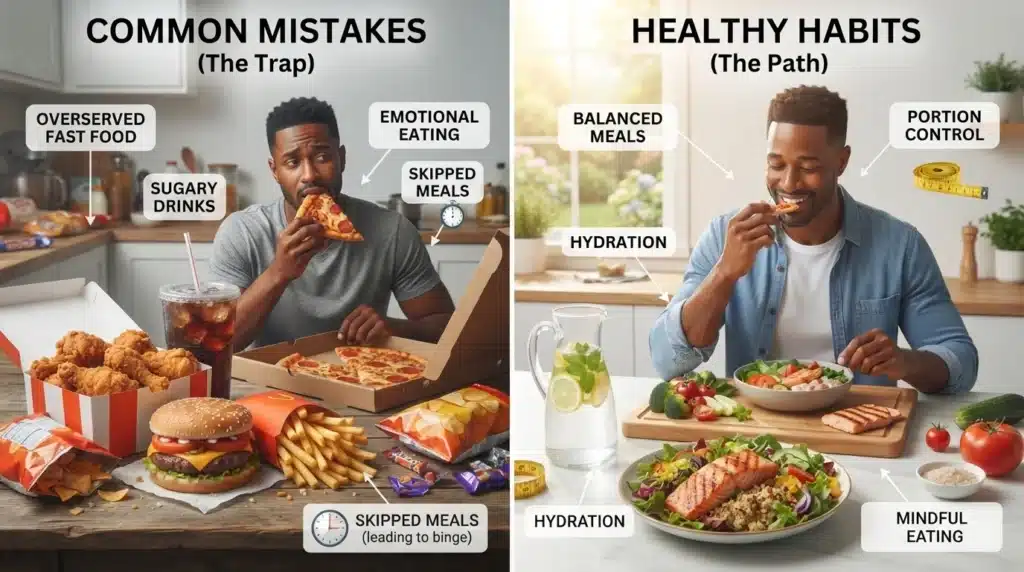
Skipping Meals
Skipping meals increases cortisol, the hormone that is responsible for stress, and it also drops sugar levels. So, this habit makes room for the culprit (stress) that lays out all the right conditions for weight gain to creep in.
Yes, skipping meals is sometimes used in intermittent fasting, but when not done properly, it can slow metabolism and increase appetite for unhealthy foods.
Following an Extreme Diet
Engaging in an extreme diet can lead to frustration because it is not sustainable in the long term. So, why engage in a quest that will not last, even if it may provide short-term results? This is the reason people who do extreme crash, juice, or detox diets only see a short-term result.
An extreme diet can cause rapid weight loss, which is not healthy because it may lead to slowed metabolism, muscle loss, malnutrition, and increased appetite.
When an extreme diet fails, it often causes eating disorders and rebound weight gain.
Ignoring Portion Size
Ignoring portion size is one of the common reasons that prevents weight loss. When you are not mindful of your meal portion size, you will be overeating without knowing it and gain weight over time.
Expecting Overnight Results
Many people usually go into weight loss quests with unrealistic expectations. When they don’t see results happening in a short period of time, they will unfortunately be discouraged and give up.
You must prepare yourself with this mindset that you are ready to put in the time, effort, and patience it requires to see real and enduring results. Any true success does not come overnight, be it in a business, fitness, or anything else you may be aspiring to achieve.
Frequently Asked Questions (FAQ)

Can I lose Weight Without Exercising at all?
Losing weight without exercise is possible because the main driver for weight loss is a calorie deficit. This means you can lose weight by eating fewer calories than your body requires. It is as simple as that.
How Much Weight Can I Lose Without Exercise?
When you employ a calorie deficit approach to lose weight, you can safely and sustainably lose 0.5 to 2 lbs. a week without exercise. However, to see results, you must be consistent with a calorie deficit (eating fewer calories than you need or burn) and eat high-protein, high-fiber foods. Also, focus on portion control and reducing or eliminating processed foods.
What Foods Help You Lose Weight the Fastest?
High nutrient-dense foods with protein and fiber can help you lose weight the fastest. The reason is that they make you feel full with fewer calories, and they also boost metabolism and slow hunger.
Some of these high-protein and fiber-rich foods include eggs, leafy greens and cruciferous veggies, fatty fish, lean protein, Greek yoghurt, beans and legumes, etc.
Is Walking Considered Exercise for Weight Loss?
Yes, walking is an exercise that can help with weight loss. It is one of the best and easiest ways to exercise without putting in much effort. Brisk walking helps to burn calories, thereby creating the calorie deficit you need to lose weight. It is also gentle on your joints and convenient because you don’t need dedicated time or equipment to do it.
How Long Does It Take to See Weight Loss Results?
Slight changes usually occur between 2 and 4 weeks. But noticeable change happens between 4 to 8 weeks. By this time, you can see a change when you look in the mirror. Others will notice your weight loss between 8 to 12 weeks of consistent, dedicated healthy weight loss habits.
What is the Best Diet for Losing Weight Without Exercise?
The best diet for losing weight without exercise is consistent calorie deficit dieting. You can achieve this by consistently consuming whole, nutrient-dense foods. In other words, cut out junk foods, sugary empty calorie drinks, and instead drink more water and eat high-protein and high-fiber foods.
Practice portion control by eating smaller meal sizes than you may usually eat.
Final Thoughts

Small lifestyle changes can go a long way to help you lose weight without actually exercising. Replacing sugary beverages with water and taking high-protein and high-fiber foods can curtail your cravings and make you feel full with fewer calories while boosting your metabolism.
Turning your daily activities into exercise can also help. For instance, taking a walk whenever possible and doing household chores like deep cleaning, mopping, and vacuuming can compensate for not doing traditional exercise or going to the gym.
Build a healthy habit you can sustain. For instance, start by drinking a cup of water first thing in the morning before that coffee, or take a walk after lunch. Add another micro goal of healthy habits when you are comfortable with the previous one.
Remember that achieving sustainable weight loss requires consistency, commitment, and manageable daily healthy habits.

I take anything and everything that improves my health seriously. Hence, I try to share my knowledge to help people who wish to improve their health status to one that enables them to live strong with confidence We also review health and fitness equipment such as treadmills, elliptical trainers, spin bikes.