
What is Emotional Eating?

Definition of Emotional Eating
Emotional eating is when your craving is ignited by negative emotions other than hunger. It usually makes the person overeat and more likely to consume processed and junk foods.
Table of Contents
The difference between emotional hunger and physical/natural hunger is that the former is always triggered by stress or boredom, and it comes suddenly. It makes the person eat random food that they think would bring comfort, and often they don’t know when they are full, hence don’t know when to stop eating.
On the other hand, physical/natural hunger comes when the body needs fuel for activities like breathing, blood circulation, temperature, and movement. Once the body is fed, the craving or hunger dies or stops.
Again, emotional eating is eating too much even when your body does not need it, but the reason is to feel better because you are scared, lonely, upset, stressed, or bored.
So, this is the reason many people indulge in emotional eating because our world today also brings its own baggage of emotional challenges. Unfortunately, many don’t know how to cope with it; hence, emotional eating.
What Causes Emotional Eating
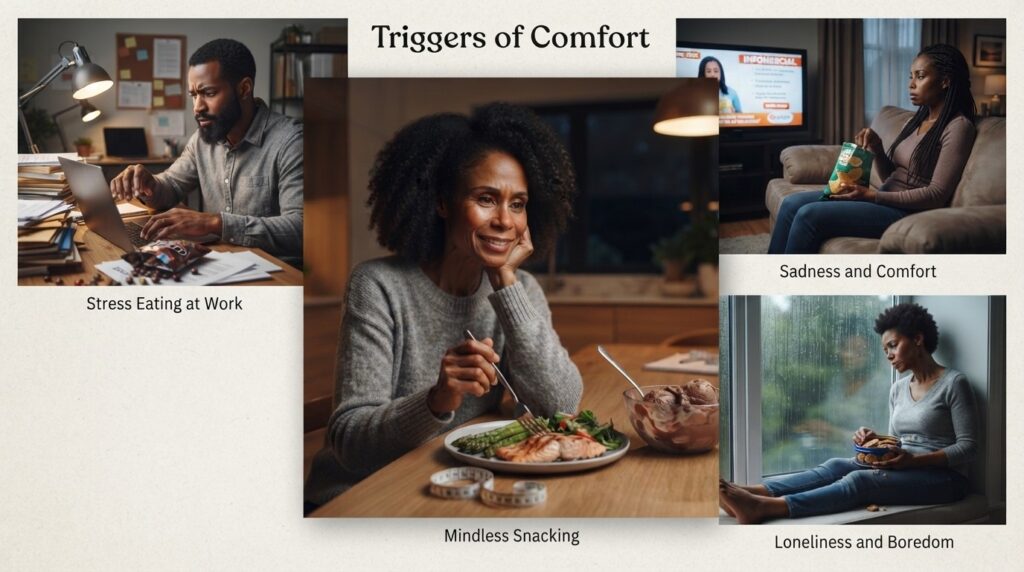
Stress & Anxiety
Stress is the primary driver of emotional eating because it causes the release of the hormone that creates excessive craving, and this hormone is known as cortisol.
Unfortunately, this hormone does not only cause emotional eating, but it also sends a signal to the brain for the body to seek fast-acting energy foods like sugar, fat, and simple carbohydrates.
Moreover, stress simultaneously lowers serotonin levels, consequently triggering the brain to crave foods that will temporarily boost mood and reduce tension.
Now, you may say, what is wrong with that? Well, the problem is that these foods are the same unhealthy foods as sugar, fat, and simple carbohydrates that are responsible for weight gain and other health issues.
The reason people naturally seek comfort food during stressful times is innate. In other words, it is a biological and psychological response that comes with stress. We are designed to seek comfort and refuge over what seems to be beyond our control.
Boredom & Loneliness
Idle time is that free or un-earmarked time you don’t have anything to do. Such a time as this can lead to boredom and loneliness, which could in turn lead to emotional eating.
The brain will naturally seek a solution to make you feel comforted and safe by creating a craving for unhealthy foods that release fast energy.
After all, lack of mental stimulation makes individuals fall back to food as a source of coping mechanisms.
Depression & Negative Emotions
Normally, depression and negative emotions disrupt appetite, and this condition may lead to a lack of appetite for food or excessive craving for unhealthy food. If a person experiences the former, the person will lose weight, but if it is the latter, the person will gain unhealthy weight if unchecked.
So for those whose appetite is increased crave palatable food that triggers temporary dopamine releases to cope with negative emotions.
Habits & Environmental Triggers
Watching TV while eating is one of the common environmental triggers for emotional eating. Your brain will be distracted by whatever it is that you are watching that is of interest to you, and unable to recognize when you are full. As a result, you will eat more than your body needs.
Also, watching TV, movies, or sports encourages mindless snacking; that is the reason many people will have popcorn on their side as they watch TV.
Moreover, watching TV also molds or influences someone’s eating habits. Watching TV exposes you to food advertisements, which can trigger an appetite for that kind of food. For instance, when there is a commercial advert for pizza, burger, dessert, or any other palatable unhealthy food, you may be tempted to get some, and this may lead to emotional eating.
To prevent this problem, simply try to eat at the dining table and avoid screen time. Instead, concentrate on the taste and flavor of your food. Eat and chew slowly so that your body can better digest and absorb the nutrients, and to send a timely signal to the brain when you are full.
In other words, if you must watch TV, do it outside your mealtime.
Signs You Are an Emotional Eater
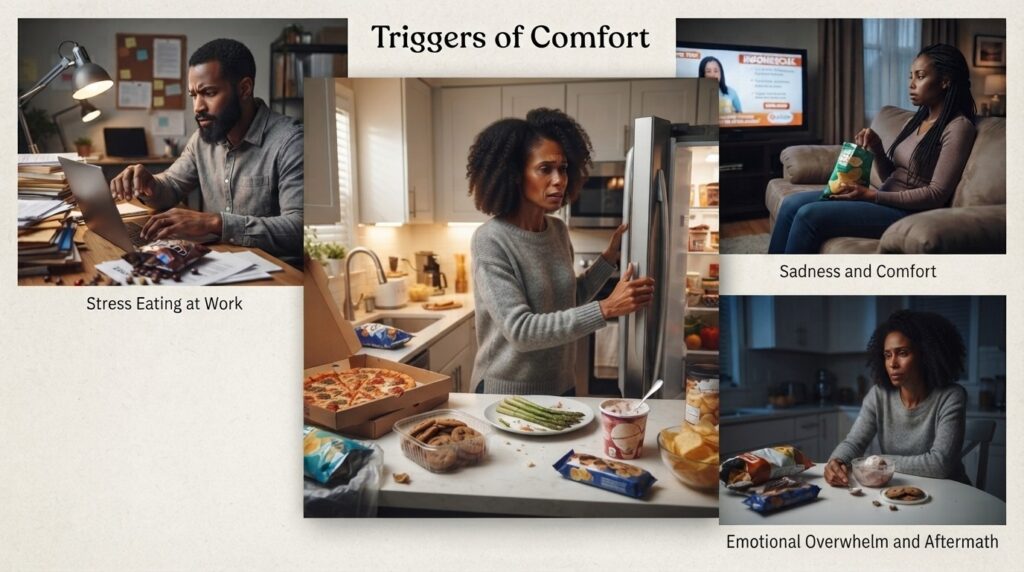
Eating Without Physical Hunger
When you tend to eat without physically getting hungry, you are an emotional eater. When you crave food or snacks after taking a meal, that is a sign that you are an emotional eater.
Also, when you ignore fullness signals or are unable to stop eating even when you know you are full is an indication that you are an emotional eater. In this case, you can use the Hunger/Fullness Scale to help resolve this problem.
Craving Certain Comfort Food
If you crave certain comfort foods such as sugary foods, salty foods, and generally fast food, chances are you are an emotional eater.
Feeling of Guilt or Shame After Eating
Sometimes, guilt, shame, and regret come after emotional eating. The reason is that you have eaten more than you need. You have eaten not for the purpose of nutrition or to quench your hunger, but to satisfy your cravings.
The feeling of guilt, shame, or regret might be from knowing that you are doing yourself a disservice by taking in more calories that might result in weight gain, especially when you wish to lose weight.
Using Food to Celebrate or Cope
This is when someone eats to cope instead of hunger. For instance, when you finish a pack of chips to cope with boredom or down cookies after cookies while preparing for a big test or an exam.
To avoid this type of emotional eating, don’t keep unhealthy snacks around; instead, snack on fresh fruits or drink water.
How to Stop Emotional Eating Naturally

Learn to Identify Your Triggers
Knowing what triggers emotional eating is only part of the solution; hence, you must also know how to stop it.
That said, to learn to identify what triggers your emotional eating, you may keep mood and food journals. This will help you understand what you eat in a given mood by identifying consistent eating patterns.
Your journal tracking must include key data such as time and place, food and amount, hunger level, and thoughts, so you can fully understand triggers for emotional eating.
Practice Mindful Eating
Eating slowly can help the body to send a signal to the brain when you are full. Also, remove distractions, such as screen time, and listen to hunger cues.
Use Healthy Ways to Manage Stress
Managing stress through healthy means is crucial. It solves half of what triggers emotional eating and weight gain.
Some of the ways to manage stress include walking, journaling, deep breathing, and meditation.
Stay Physically Active
Did you know that exercise improves mood and flushes out stress? It boosts a chemical called endorphins that naturally conjure good feelings and kill pain. To further elaborate, endorphins are neurotransmitters that reside in the brain and the nervous system.
Eat Balanced, Filling Foods
Eating healthy foods Such as protein, vegetables/fiber, and healthy fat can control your appetite and make you feel full.
They stabilize sugar levels and also help you to eat moderately without craving unhealthy snacks.
Drink Enough Water
Maintain proper hydration throughout the day. This prevents the illusion of mild dehydration for hunger. Naturally, when thirsty, the body may mistake it for hunger.
Improve Sleep
Poor sleep quality increases cravings because it raises hunger hormones called ghrelin and decreases fullness hormones called leptin.
Therefore, due to this hormonal imbalance, you will experience high or aggressive cravings for not just any food but for high-carb and fat junk foods.
So, try to maintain a sleeping schedule that can improve your sleep quality. Going to bed early and at the same time every day can help to improve your sleep.
Keep your bedroom clean, quiet, dark, and cool to induce a good, restful night.
Natural Foods That May Help Reduce Emotional Eating

Below are the lists of foods that can help reduce emotional eating.
High Protein Foods
- Eggs
- Greek Yoghurt
- Chicken
- Beans
Fiber-Rich Foods
- Vegetables
- Oats
- Whole Grains
- Fruits
Healthy Fats
- Nuts
- Avocados
- Olive Oil
- Seeds
Mood Supporting Foods
- Dark Chocolate (to be taken in moderation)
- Fermented Foods
- Fatty Fish
Lifestyle Habits That Prevent Emotional Eating

Develop a Consistent Eating Schedule
Try not to skip a meal or become extremely hungry before eating. Eating when necessary stabilizes sugar levels and regulates appetite.
Eating within one hour of waking up to activate your metabolism is important.
This is a standard schedule for eating
- 7:30 AM Breakfast
- 10:30 AM Morning snack (heathy hunger crushing snack such as Greek Yoghurt, Nuts, and Protein Bars)
- 1:30 PM Lunch
- 4:30 PM Afternoon Snacks
- 7:30 PM Dinner
Manage Daily Stress
Successfully managing your daily stress includes balancing your schedule between work and other leisure activities. You should make time for relaxation techniques and engage in activities that keep you calm or lighten you up.
Having time to engage in personal interests triggers the body’s relaxation response. This can lower cortisol levels, prevent burnout, and boost overall wellbeing.
Frequently Asked Questions (FAQ)

Can Emotional Eating Be Stopped Naturally?
Emotional eating can be stopped naturally by knowing what triggers it. This will enable you to identify the causes and accordingly avoid them. Staying active is another way to prevent or stop emotional eating. Exercise produces endorphins that reduce stress, and as you may know, stress is one of the major culprits that causes emotional eating.
Finally, eat healthy foods and stay hydrated. These will go a long way to reduce your cravings and make you feel full.
What is the Fastest Way to Control Emotional Eating?
The fastest way to control emotional eating would be to avoid stress, stay hydrated, snack healthy, have a hunger reality check, and stay active.
Which Foods Help to Reduce Emotional Eating?
Foods that can reduce emotional eating include eggs, green yoghurt, chicken, beans, vegetables, oats, whole grains, fruits, avocado, olive oil, seeds, fatty fish, dark chocolate (in moderation), and fermented foods.
Is Emotional Eating the Same as Binge Eating?
Emotional eating is when someone is driven to eat because of emotions (such as stress) other than hunger, while binge eating is when someone eats large amounts of food repeatedly with a sense of loss of control.
Can Stress Alone Cause Emotional Eating?
Yes, because stress is the product of lingering fear, anger, sadness, or lack of active life. In other words, stress cannot occur without an underlying cause.
How Long Does It Take to Overcome Emotional Eating Naturally?
There is no timeline established as to when someone can overcome emotional eating naturally. It depends on individual cases. Some may successfully overcome emotional eating by changing lifestyle habits, while some may need professional help.
Conclusion

As aforementioned, emotional eating is caused by unhealthy lifestyle habits, which can be turned around by healthy lifestyle habits.
Avoid unhealthy foods and a sedentary lifestyle. These are the major elements that can trigger emotional eating.
Plan your day, and keep healthy snacks within reach. Drink more water daily for proper hydration and try to be active. Even if you are a busy professional, find a way to move around, even in your workplace.
Sleep early and be consistent with your time for bed every day. This way, you will be able to get good hours of quality sleep.
You can start today because it is possible to overcome emotional eating naturally.

I take anything and everything that improves my health seriously. Hence, I try to share my knowledge to help people who wish to improve their health status to one that enables them to live strong with confidence We also review health and fitness equipment such as treadmills, elliptical trainers, spin bikes.